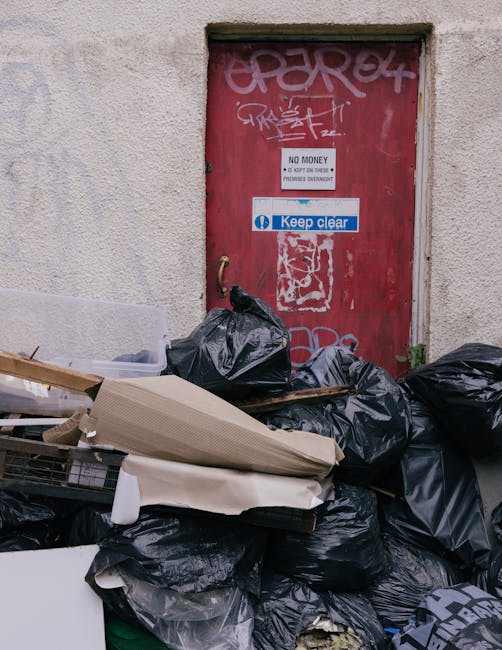
Confused by Disposal Fees in CR8? Avoid Hidden Costs
If you have ever been quoted one price, then watched it creep up with add-ons you did not expect, you are not alone. Disposal fees in CR8 can be confusing, especially when you are trying to clear a flat, move house, or shift bulky items in a hurry. The good news? Most hidden costs are avoidable once you know what to ask, what to check, and where the real charges tend to sit. This guide breaks it down in plain English so you can compare quotes properly and avoid those annoying surprises.
In our experience, the biggest savings usually come from preparation rather than bargaining. A little planning makes a surprisingly big difference. And yes, sometimes the smallest item on the van turns into the most expensive one on the invoice. Bit frustrating, that.
Why Confused by Disposal Fees in CR8? Avoid Hidden Costs Matters
Disposal fees are not just an awkward line on a quote. They can change the whole economics of a move, clearance, or bulky-item collection. If you are clearing a property in CR8, the cost may include loading time, transport, disposal or recycling charges, labour, congestion or access issues, and sometimes extra fees for certain items. The trouble is that these charges are often described in different ways by different companies.
That is why people get caught out. One provider may bundle disposal into a single rate, while another lists it separately. Neither is automatically wrong. But if you compare them without understanding what is included, you can easily end up choosing the cheaper-looking option that becomes more expensive by the end of the day.
This matters even more in a local area like CR8, where parking, stair access, and narrow streets can affect how long a clearance takes. A quick job on paper can become a slower, more awkward one in reality. And as anyone who has tried to lug an old wardrobe down a tight hallway knows, reality is not always polite.
Expert summary: the safest way to avoid hidden disposal costs is to get a written breakdown, describe the items clearly, and confirm how access, weight, and waste type affect the final price.
For a lot of people, this issue comes up alongside decluttering. If you are sorting through belongings before a move, streamlining your move with smart decluttering can reduce the amount that needs disposing of in the first place. Less waste usually means less cost, and less stress too.
How Confused by Disposal Fees in CR8? Avoid Hidden Costs Works
At a basic level, disposal fees cover the handling of items that cannot simply be left at the roadside or dropped into a normal household bin. The provider has to collect them, move them safely, and dispose of them appropriately. Depending on the job, that may involve recycling, transfer to a waste facility, or special handling for heavy or awkward goods.
Here is where things often get murky. Some businesses quote by the van load. Others quote by item, by weight, by labour time, or by a combination of all three. A quote may also change if the team arrives and finds the property access is harder than expected, or if the items include things that need careful handling, such as mattresses, white goods, or large furniture.
There is no single pricing formula that covers every job. That is exactly why clarity matters. If a company says "disposal included," ask what that actually means. Included in what? Is it for ordinary mixed waste, or only for specific items? Does it cover loading from inside the property, or only from kerbside? These are fair questions, not annoying ones.
If you are dealing with bulky pieces, the logistics can matter just as much as the disposal itself. For example, furniture that needs dismantling first may take longer than expected. A helpful place to start is our guide to safe furniture tactics for narrow stairs in Purley homes, because access issues often shape the total cost more than the disposal fee alone.
A good provider should explain whether the quote includes:
- collection from inside the property or only from outside
- labour for lifting, carrying, and loading
- separate charges for heavy, fragile, or hazardous items
- disposal or recycling charges at the destination
- waiting time if access or parking slows the team down
- any weekend, evening, or same-day surcharge
Once you understand those moving parts, the whole thing feels much less mysterious. Still a bit boring, perhaps, but much less mysterious.
Key Benefits and Practical Advantages
Getting disposal fees right is not only about saving money. It also helps you avoid delays, reduce hassle, and make better decisions about what to keep and what to let go. Truth be told, the process often becomes easier once the numbers are visible.
- Clear budgeting: you can predict the real cost of clearing unwanted items before the team arrives.
- Better comparisons: comparing like-for-like quotes becomes possible when charges are itemised.
- Fewer disputes: everyone knows what was agreed in advance, which keeps the day calmer.
- Smarter decluttering: once fees are visible, it is easier to decide whether an item is worth keeping, donating, or disposing of.
- Lower risk of delays: if bulky items are identified early, the right vehicle and labour can be arranged from the start.
If your disposal job is part of a bigger move, it can also make the rest of the day smoother. For instance, if you are packing in stages, packing like a pro can reduce last-minute rubbish and broken bits that suddenly need disposal. The same goes for larger home moves, where a steadier plan tends to save both time and money.
And if you are moving a bed or other bulky item, it is worth looking at how to transport your bed and mattress with ease so you are not paying to dispose of something that could have been moved safely instead.
Who This Is For and When It Makes Sense
Disposal fees in CR8 are relevant to far more people than you might think. It is not just landlords or offices with big clear-outs. Everyday household moves, student moves, end-of-tenancy clearances, and inherited property clearances can all trigger hidden disposal costs.
This is especially useful if you are:
- moving house and need to clear broken furniture, old appliances, or mixed rubbish
- emptying a flat after a tenancy ends
- sorting a loft, garage, or storage room
- handling a same-day clearance after a sudden move
- downsizing and deciding what is worth taking with you
- working through an office move where old desks, chairs, or packaging need removing
Sometimes disposal is the obvious choice. Sometimes it is not. If an item is still usable, storage may be cheaper than disposal in the short term. For example, secure storage tips for an unused freezer may sound oddly specific, but the principle is the same: keeping something safely stored can be cheaper than replacing it too quickly.
For larger items like sofas, there is also a practical middle ground. expert storage strategies for sofas can help you delay the decision, especially during a move when you do not want to rush into paying disposal fees for something that still has life left in it.
Step-by-Step Guidance
If you want to avoid hidden disposal costs, a structured approach works best. Nothing glamorous here, just solid organisation. And yes, it really does help.
- List every item clearly. Include furniture, appliances, bags of rubbish, and anything awkward or heavy. Be specific rather than saying "a few bits."
- Separate what is reusable. Decide whether an item should be kept, donated, sold, stored, or disposed of. This single step can cut the bill more than you expect.
- Check access conditions. Note stairs, lift availability, parking distance, and whether the team will need to carry items a long way.
- Ask for a written breakdown. Request a quote that states what is included and what counts as extra.
- Clarify item restrictions. Some materials and bulky items need special handling, so do not assume everything is treated the same.
- Confirm timing. Ask whether the quote changes if the job takes longer than expected or if it needs to be done outside normal hours.
- Review the terms before booking. A few minutes here can save a proper headache later.
One useful habit is to photograph the items and the access route before the job. A few clear pictures of the hallway, stairs, parking, and the items themselves can reduce misunderstandings. This is particularly handy for tighter properties and awkward entrances.
If the move also involves lifting heavy objects, it may help to read journey to safe solo heavy object lifting and kinetic lifting as a revolutionary technique. The first focuses on safer handling, and the second gives a useful sense of how proper lifting can prevent costly damage or injury. Not the sort of detail people think about first, until they absolutely have to.
Expert Tips for Better Results
Small decisions can make disposal much cheaper. That is the part people often miss. They focus on the headline fee and ignore the easy wins.
- Group similar items together: it is easier to price and handle a clear pile than a mixed one.
- Break down furniture where possible: dismantled items often load more efficiently and may take less labour.
- Avoid booking in a panic: same-day jobs can be useful, but they may leave less room to compare pricing.
- Think about resale or reuse first: an item with some value may be better sold or passed on than paid to dispose of.
- Watch for "minimum charge" rules: even tiny jobs may have a floor price, so it helps to combine tasks where practical.
- Ask what happens to recyclable materials: responsible sorting can sometimes reduce the amount classed as general waste.
A quick example: if you are moving from a flat in CR8 and the hallway is tight, you may be tempted to book disposal for a large wardrobe straight away. But if it can be dismantled safely, the cost may drop. That is where a bit of patience pays off. Same with a piano, by the way; the wrong assumption there can get expensive very quickly. Our guide to moving a piano explains why specialist handling can be a better option than disposing of or damaging a valuable item.
When you are choosing a provider, do not just ask "how much?" Ask "what would make this price change?" That one question tends to reveal a lot.
Common Mistakes to Avoid
Most hidden costs come from a few repeat mistakes. Once you know them, they are easy enough to sidestep.
- Vague descriptions: saying "some rubbish" is not enough. The provider needs to know volume, weight, and item type.
- Assuming access is simple: if the team has to park far away or carry items down multiple flights, the quote may shift.
- Ignoring add-ons: disassembly, waiting time, or urgent booking fees can all be missed if you do not ask.
- Not checking the terms: a quote can look good right up until the extras appear.
- Forgetting about packing waste: cardboard, tape, polystyrene, and wrapping can build up fast after a move.
- Choosing disposal before decluttering: people often pay to throw away items they could have sold, stored, or moved more cheaply.
It is also easy to underestimate the amount of cleanup required after a move. Leftover packaging, dust, and odd bits of broken furniture can all become part of the disposal pile. A practical companion read is mastering the art of house cleaning before you move, because a cleaner property often makes the final clearance faster and cheaper.
And if you are trying to simplify everything at once, our decluttering article mentioned earlier is worth another look. Less stuff, less fuss. Usually.
Tools, Resources and Recommendations
You do not need fancy tools to stay on top of disposal fees, but a few practical resources help enormously.
- A photo gallery on your phone: take clear images of every item and access point.
- A simple note list: write down items, estimated sizes, and any fragility or weight concerns.
- Measuring tape: useful for checking whether an item will fit through doors or down stairs.
- Marker labels: tag keep, donate, store, and dispose piles so nothing gets mixed up.
- Plastic sacks and cardboard boxes: ideal for separating loose waste from reusable items.
For readers planning a fuller move, it may also help to review secrets to a peaceful house move and packing like a pro. They are not about disposal fees specifically, but they reduce the kind of last-minute chaos that turns into extra disposal cost.
If you are comparing service types, it can help to look at services overview, removal services in Purley, and removals in Purley as you work out whether you need a full move, a man and van, or just a clearance-focused job. Different service models often package disposal in different ways.
For people who need extra handling or a vehicle-only solution, it can also be worth understanding man with a van in Purley, man and van in Purley, and removal van in Purley. Sometimes the right fit is not the biggest service, just the cleanest one for the job.
Law, Compliance, Standards, or Best Practice
When disposal is involved, best practice matters. You do not need to become a waste expert, but it helps to know that responsible disposal should be traceable, safe, and handled by a provider that follows proper procedures. In the UK, there are clear expectations around the lawful handling of waste and the duty not to fly-tip or dump items improperly.
From a practical point of view, that means you should expect:
- clear pricing and no misleading "from" quote that hides key charges
- safe handling of heavy and awkward items
- respect for property access, neighbours, and parking rules
- careful sorting for recyclable or reusable materials where possible
- transparent terms if something changes on the day
Best practice also includes fair communication. If the quote changes because the actual job is different from the description, that should be explained before work continues wherever possible. A decent provider will not spring it on you with a shrug and a clipboard. Well, they might try, but you should not accept it.
If safety is on your mind, it is worth reading the company's health and safety policy and insurance and safety information before booking. Those pages are useful when you want peace of mind that your items, your property, and the people handling them are properly covered. For customers who care about responsible disposal, recycling and sustainability is also a sensible page to review.
Options, Methods, or Comparison Table
Not every disposal job needs the same approach. The right method depends on volume, urgency, item type, and how much you want to do yourself. Here is a straightforward comparison to help you choose.
| Option | Best for | Pros | Watch out for |
|---|---|---|---|
| DIY disposal | Small amounts, flexible timing, low-value items | Can be cheaper upfront, full control | Time-consuming, transport issues, disposal site fees, heavy lifting |
| Man and van clearance | Mixed household items, moderate volume, quick turnarounds | Flexible, practical, often cheaper than a full removal | Quote can change if access is difficult or items are heavier than expected |
| Full removal service with disposal | Moves plus clearance, larger homes, office clear-outs | Convenient, coordinated, less lifting for you | May cost more if not clearly itemised |
| Storage before disposal | Items you are not sure about yet | Buys time, avoids rushed mistakes | Storage has its own cost, so weigh it carefully |
For many households, a mixed approach works best. Move the useful things, store the uncertain ones, and dispose of the broken or unwanted items only after you have checked the numbers. That is usually the sweet spot.
Case Study or Real-World Example
A recent CR8 house move involved a family clearing a two-bedroom flat after downsizing. At first glance, the disposal list looked simple: a broken chest of drawers, a mattress, three boxes of mixed household rubbish, and a handful of old kitchen items. The first quote they received looked low because it only covered collection, not internal carry, stair labour, or the extra time needed to remove the wardrobe from a narrow landing.
Once they listed the items properly and explained that the flat was on an upper floor with limited parking, the provider revised the quote. It was higher, but it was honest. More importantly, the family then realised they could keep the wardrobe for storage, sell a dining chair set, and reduce the disposal pile by nearly half. The final bill was lower than the first "cheap" quote would have become.
That is the real lesson. The cheapest figure is not always the cheapest outcome. A careful quote, plus a bit of decluttering, often wins out in the end.
One of the family members later said they wished they had sorted the items a day earlier. Fair enough. That extra evening would have saved a lot of eyebrow-raising on moving day.
Practical Checklist
Use this before you book disposal or clearance in CR8:
- Have I listed every item clearly?
- Have I separated keep, donate, store, and dispose piles?
- Do I know whether access is easy or awkward?
- Have I shared photos or measurements?
- Have I asked what is included in the quote?
- Do I know whether labour, waiting time, or stair carry is extra?
- Have I checked if any item needs special handling?
- Do I understand whether disposal, recycling, or transport is bundled together?
- Have I reviewed the terms before booking?
- Have I compared at least two clear quotes on the same basis?
If the answer to any of those is no, pause and tidy up the information first. It takes a little longer, but it protects your budget.
Conclusion
Disposal fees in CR8 do not have to be confusing. Once you understand what is usually included, what commonly counts as extra, and how access affects the final price, it becomes much easier to avoid hidden costs. The trick is to slow things down just enough to ask the right questions before anyone starts lifting.
If you are planning a move, a flat clearance, or a larger tidy-up, start with a clear list, be honest about the access, and get everything in writing. That is how you keep control of the budget and the day itself. A bit of organisation now can save you a proper headache later.
Get a free quote today and see how much you can save.
Frequently Asked Questions
What are disposal fees in CR8?
Disposal fees are charges for collecting, moving, and disposing of unwanted items. In CR8, they may also reflect access issues, item size, labour, and whether the items are recycled, reused, or treated as general waste.
Why do disposal fees vary so much between companies?
They vary because providers price jobs differently. Some include labour and disposal in one figure, while others itemise each part. The route, parking, stairs, and type of waste can also change the price.
How can I avoid hidden disposal charges?
Give a full item list, share photos, explain access conditions, and ask for a written breakdown. Most hidden charges appear when the original description was too vague.
Is it cheaper to dispose of items myself?
Sometimes, yes. But once you add transport, time, lifting effort, and any site fees, DIY disposal can become less attractive. For small loads it may work, but for awkward items a service can be better value.
Do disposal fees include lifting items from inside my property?
Not always. Some quotes only cover collection from outside, while others include internal carrying and stair work. Always check before booking so you know exactly what you are paying for.
Are recycling and disposal the same thing?
No. Recycling means the items or materials are separated for reuse where possible, while disposal may mean the item is treated as waste. Some services do both, but the quote should explain how it is handled.
What items can increase my disposal cost?
Large furniture, mattresses, heavy appliances, mixed waste, and items that are difficult to lift or dismantle can all raise the cost. Access problems and urgent booking can also add to the total.
Should I declutter before asking for a disposal quote?
Yes, if possible. Decluttering first helps you reduce the amount that needs collecting and gives the provider a clearer picture. It also stops you paying to remove things you might still want to sell or store.
Can disposal fees change on the day of collection?
They can, but only if the job turns out to be different from what was described. For example, if there are more items, harder access, or extra labour needed. A clear pre-booking description helps prevent this.
Is same-day disposal more expensive?
It often can be. Same-day jobs are useful in a rush, but the reduced notice may limit flexibility and increase the charge. If you can book a little ahead, you may get better value.
What should I ask before agreeing to a disposal quote?
Ask what is included, what counts as extra, whether labour is covered, whether stairs or parking affect the price, and whether disposal or recycling charges are bundled in. Those questions usually reveal the true cost quickly.
Where can I learn more about related move planning?
It can help to read about a peaceful house move, pre-move house cleaning, and moving near Purley Station and access parking. Those topics often overlap with disposal planning, especially when timing and access are tight.